High Desert Planting: Managing Cold Pockets and Elevation
High desert gardeners can have warm afternoons, chilly nights, late spring freezes, and early autumn cold in the same growing season. Elevation and small landscape features make planting dates unreliable from one yard to the next. The practical solution is to map your own cold spots, use soil and weather clues together, and choose planting windows that leave crops enough time to mature.
Why elevation and cold pockets change planting time
In Oregon’s high desert, elevation is only one part of the growing-season puzzle. Higher sites are often cooler, and cool nights can slow plant growth even when daytime temperatures feel pleasant. A garden’s exposure, slope, wind, soil, and nearby buildings also affect how quickly it warms and how vulnerable it is to frost.
This is why a calendar that works in one town—or even one neighborhood—may not work in another yard. Planting in Central Oregon: Short Seasons and Summer Cold explains the broader challenge: crops need not only a chance to survive a cold night but enough favorable growing conditions to produce a harvest.
How elevation affects a garden
As elevation increases, temperatures generally tend to decrease. That can mean a later start to outdoor planting, slower growth, and less dependable warmth for crops that need a long, warm season. But elevation alone cannot tell you when to plant. A sunny, sheltered garden on a slope may warm sooner than a lower garden in a shaded hollow.
Elevation also affects the length of the usable season. A crop may survive the first part of summer but still fail to mature if cool nights persist or autumn cold arrives before the harvest is ready. When selecting crops, consider the entire window from sowing or transplanting to expected harvest—not just whether a plant can tolerate a brief chill.
Seed-packet days to maturity are estimates, not guarantees. Actual growth depends on conditions, and cool weather can slow development. Treat the estimate as a planning aid and build in flexibility, especially for crops that need sustained warmth. For more on evaluating those estimates, see Adjusting Seed Packet Days to Maturity for Chilly Nights.
Why cold air collects in some yards
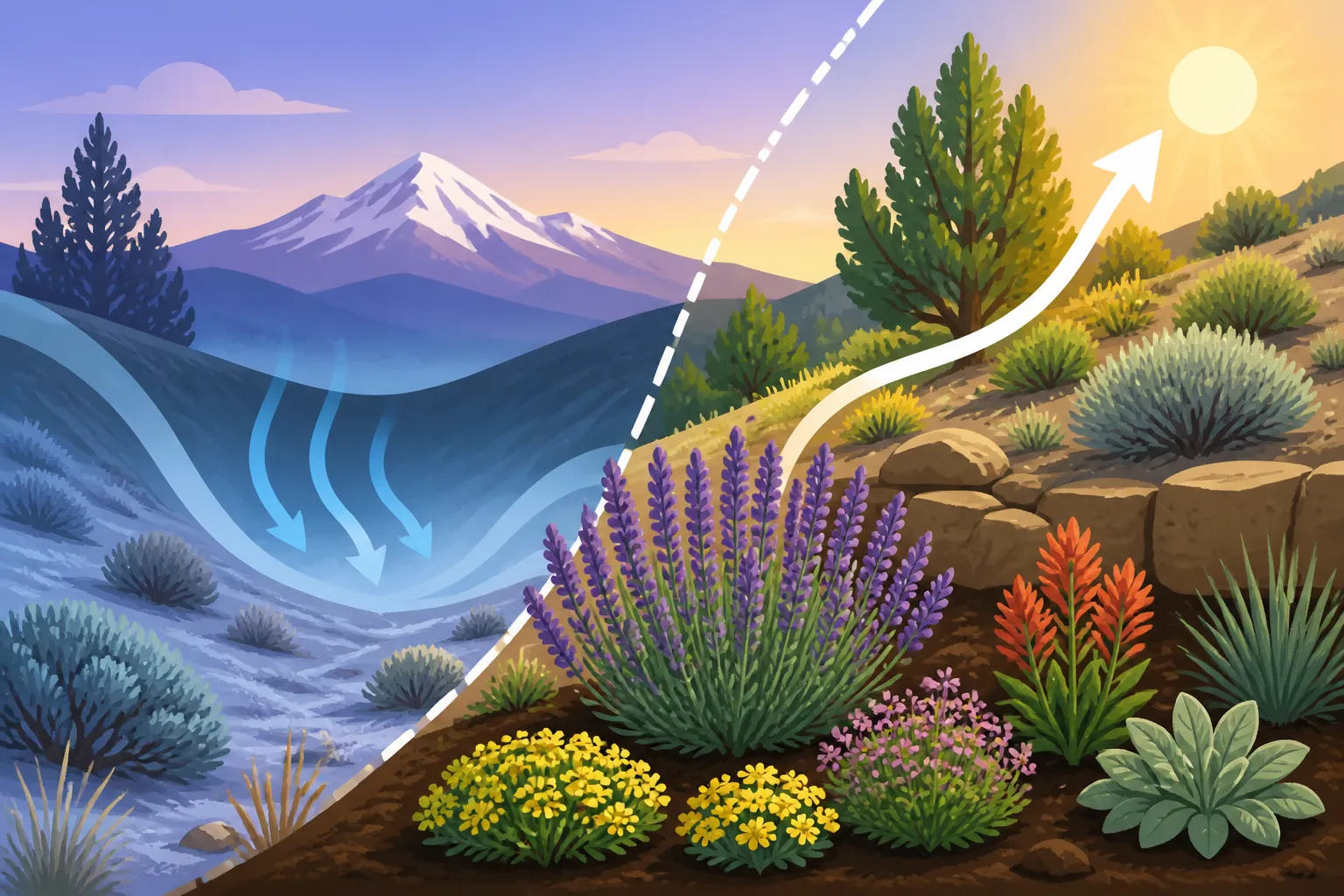
On calm, clear nights, cold air can move downhill and settle in low areas. A shallow dip, the bottom of a slope, or a garden enclosed by dense barriers may hold colder air than nearby ground. These cold pockets can experience frost when a higher, more open area does not.
The effect is easy to miss if you judge conditions from a porch, a nearby road, or a regional forecast. A thermometer near the house may show a different temperature from one near the garden’s lowest point. Frost risk can also vary across a single bed: an exposed edge may cool sooner than soil close to a wall or fence.
A few common clues point to a cold pocket:
- Frost or dew lingers longer in one part of the yard.
- Plants in the same bed show different levels of cold damage.
- Low areas stay damp or cool after nearby soil has warmed.
- A garden sits below a slope or behind a barrier that may slow airflow.
- Tender plants struggle in one location but do better elsewhere under similar care.
These clues help you refine your planting plan. They do not replace observation, but they can show where to plant early crops, where to reserve space for later sowing, and where protection may be most useful.
Map your yard before you set planting dates
A regional calendar is a starting point, not a yard-level prescription. To make it useful, divide your growing space into a few practical zones: warmer and cooler, more exposed and more sheltered, or better and worse drained. You do not need a detailed survey. A hand-drawn map and consistent observations can reveal patterns over time.
Note elevation and exposure
Start by noting whether each bed is on a slope, at the top of a rise, or in a low spot. Record which direction it faces and how much sun it receives. A sunny, sheltered bed may warm sooner than a shaded one, while an exposed site may lose heat quickly at night or face drying winds.
Also notice nearby features. Walls, paving, fences, and large rocks can affect local warmth and airflow. Their influence depends on their position and the site, so do not assume every sheltered spot will stay frost-free. A wall may help moderate conditions in one area while a nearby enclosed corner still traps cold air.
For a clearer picture, check the garden at different times rather than relying on one observation. Compare the low spot with the upper bed after a cold night, after rain, and during a sunny afternoon. Why Your Garden Microclimate May Differ From the Map Zone offers more detail on why broad maps cannot capture every yard’s conditions.
Keep simple temperature and soil notes
A minimum-and-maximum thermometer can help you compare parts of the yard. Place it where plants grow, away from direct contact with a wall or paving, and use the same locations when comparing readings. A soil thermometer can help you see whether the bed is warming enough for the crop you want to sow.
Keep a brief record of:
- Overnight low temperatures in your coolest and warmest garden spots.
- Soil temperature at the depth relevant to sowing or planting.
- Whether frost formed, and where it appeared.
- Rainfall or irrigation that left the soil wet or cold.
- The date you sowed or transplanted and how plants responded.
The purpose is not to predict every cold night. It is to learn which areas warm first, which stay cold, and how reliably plants establish in each one. A few seasons of notes can make your planting decisions more useful than a general calendar alone.
Choose weather information carefully
A weather station can provide helpful regional context, but its conditions may not match a high-desert garden with different elevation, slope, or exposure. When comparing forecasts or climate information, choose a station that is as relevant to your location as possible and treat its readings as context rather than a promise about your yard.
Matching NOAA Weather Stations to Oregon Microclimates and Elevation explains what to consider when choosing a comparison station. For a broader look at frost information and its limits, see Spring Frost Dates and Freeze Risk Across Oregon. Frost dates describe probabilities, not fixed annual events, and local conditions can differ from the station used to calculate them.
Build a planting calendar from conditions, not a single date
A useful planting calendar combines several signals: crop needs, soil warmth, recent weather, the local frost pattern, and the time remaining before autumn cold. One date cannot account for all of these. Use a calendar to organize decisions, then adjust it to the conditions in your beds.
Sort crops by what they need
Cool-season crops are generally more tolerant of cool growing conditions than tender warm-season crops. That makes them more suitable for early sowing or planting when nights remain chilly, although cold, wet soil can still delay emergence or damage young plants.
Warm-season crops need warmer soil and sustained warmth to grow well. A sunny afternoon does not show that a bed has warmed through or that nights are suitable. Before sowing or transplanting a tender crop, check soil conditions and the forecast, then consider how much time the crop needs to mature.
| Crop group | What to consider | Practical approach |
|---|---|---|
| Cool-season crops such as peas, leafy greens, and many root crops | Soil may be workable before it is warm; cold, wet ground can slow establishment | Sow or transplant when soil and moisture conditions suit the crop, and protect young plants if a cold snap is forecast |
| Brassicas such as broccoli and cabbage | Starts can tolerate cooler conditions better than tender summer crops, but establishment still depends on weather and soil | Harden off starts and use a sheltered bed if your site is exposed |
| Warm-season crops such as tomatoes, peppers, beans, and squash | Need warmer soil and more dependable warmth; chilly nights may slow growth | Wait for suitable soil warmth and nights, or use protection while monitoring ventilation and temperatures |
| Long-season crops | Need enough time to mature before autumn cold; cool nights can extend the growing period | Check days to maturity, choose a warm site, and plan a backup if the season turns short |
These are broad groups, not guarantees. Crop varieties differ, and the same crop can perform differently in a warm, sheltered bed and a cold, exposed one.
Use soil temperature as a planting signal
Soil temperature is especially useful when deciding whether to sow warm-season crops. The soil can remain cold after the air begins to feel warm, particularly in shaded beds or areas with poor drainage. Measure in the bed rather than assuming nearby air temperature reflects the root zone.
Follow crop-specific guidance for minimum soil temperatures rather than applying one threshold to every seed. When to Plant in Oregon: Using Soil Temperature and Season Clues covers how to combine soil warmth with other seasonal signs. If soil is cold and wet, waiting can be more reliable than sowing into conditions that delay germination.
Raised beds and containers may warm earlier than in-ground soil, but they can also cool faster and dry out more quickly. Their advantage is not a guaranteed early planting date; it is the chance to manage a smaller volume of soil and observe its conditions directly. See How Raised Beds Warm Soil Earlier for Oregon Spring Vegetables for more on that trade-off.
Allow time for plants to mature
A crop that can tolerate cool conditions may still need enough time to reach harvest. For each crop, check the seed packet or plant label for its maturity estimate, whether that estimate begins at sowing or transplanting, and any specific temperature needs. Then compare the estimate with your local growing pattern.
In a short season, favor crops that are likely to finish in your conditions and avoid relying on a single late planting of a long-season crop. If you want to try a crop that may be marginal, grow a smaller number of plants or use a protected bed so one cold spell does not jeopardize the whole garden.
The high-desert growing season is not just the span between a typical last and first frost. Slow growth during cool nights can reduce the time available for a crop to develop, even when frost does not occur. How Elevation Shapes the High Desert Growing Season and Short-Season Crops for Central Oregon’s Chilly Nights can help you think through season length and crop selection.
Protect crops without creating new problems
Protection can help you manage a cold snap or extend a crop’s useful season, but it does not remove the need to consider soil warmth, ventilation, and plant maturity. A cover that traps heat during the day may need attention when conditions warm. A sheltered location can help with cold and wind, but it may also reduce airflow or leave plants damp.
Match protection to the risk
Row covers, cloches, cold frames, and other covers can reduce exposure to cold, depending on their design and how they are used. Check that a cover is secured and does not crush plants. Follow product directions, and monitor covered crops because temperatures beneath a cover can differ from the air outside.
Protection is most useful when you have a specific purpose: shielding young plants from a forecast cold night, keeping wind off transplants, or creating a warmer environment for a crop that is otherwise suited to your season. It is less reliable as a substitute for planting into cold, wet soil or for choosing crops that need more warmth than your site can provide.
For guidance on outdoor starts when cold weather may return, see Can You Plant Starts Outdoors if Spring Frost Might Return?. Using Walls-O-Water and Cold Frames to Protect Early Tomatoes discusses options for heat-loving plants, while Covering Garden Beds for First Frost Without Crushing Crops focuses on protecting crops as autumn cold approaches.
Harden off transplants
Transplants raised indoors or in a greenhouse need time to adjust to outdoor sun, wind, and temperature swings. Move them into outdoor conditions gradually, increasing exposure over several days according to their response and the weather. Avoid placing tender starts straight into a windy, exposed bed after a sheltered growing period.
If a cold spell is forecast, delay transplanting or provide suitable protection. A plant that has been hardened off is better prepared for outdoor conditions, but hardening off does not make a tender crop frost-proof.
Manage wind and water
Wind can stress young plants, dry the soil surface, and make exposed beds feel less favorable than sheltered ones. Use natural shelter where it does not trap cold air or shade the garden excessively. When adding a windbreak, leave room for airflow and consider whether its placement could create a low, enclosed pocket.
Watering needs also change with weather and soil. Cold, wet soil can be slow to warm and may not need additional water, while a windy site may dry more quickly. Check the soil before watering rather than following a fixed schedule. If you use mulch, remember that it can help conserve moisture but may also slow warming when applied over cool soil. Delay heavy mulching around a bed if warming the soil is a priority.
Plan the season by planting in stages
A staged planting plan lowers the risk of losing the whole crop to one cold spell or a short season. It also gives you a chance to learn how your yard behaves before committing every bed to the same schedule.
Start with the reliable part of the garden
Use your warmest, best-drained, most sheltered area for crops that need the longest season or most warmth. Reserve colder or more exposed spots for crops that tolerate cool conditions, or use them later after the soil has warmed. Avoid treating the lowest part of the yard as your earliest planting area just because it is convenient.
If you have only one bed, use its conditions to set the pace. Plant cool-season crops when their soil and weather requirements are met, then make warm-season crops a separate decision rather than assuming that the first successful sowing means the bed is ready for everything.
Stagger sowing and transplanting
Instead of sowing an entire crop at once, plant in smaller batches when appropriate. Staggering can spread harvests and reduce the chance that one weather event affects every plant at the same stage. It also helps you compare how plants respond to different conditions.
The best interval depends on the crop, your available space, and your harvest goals, so avoid applying one schedule to every vegetable. When to Direct Sow Seeds Outdoors Across Oregon Regions provides a broader framework, while Succession Sowing Lettuce to Ensure a Continuous Harvest covers an example of spreading sowings for a steadier crop.
Keep a fallback plan
In a short or uncertain season, decide in advance what you will do if a crop is delayed. Possible adjustments include choosing a shorter-maturing crop for a later planting, switching a bed to cool-season vegetables, or protecting a small number of plants rather than trying to cover a large area.
If a warm-season crop is still not established when the growing window is narrowing, compare the time remaining with its maturity estimate and your local conditions. Starting more plants does not necessarily solve a lack of warmth or time. It may be more practical to prioritize crops with a better chance of producing before autumn cold.
Review what happened after harvest
Record which beds warmed first, where frost lingered, how long transplants took to establish, and which crops matured. Note whether protection helped and whether it created extra work. The next season, use those observations to adjust crop placement and timing instead of repeating the same plan by habit.
A simple record is enough: crop, location, sowing or transplanting date, soil condition, protection used, and harvest outcome. Over time, this turns a broad regional planting calendar into a more useful plan for your own high-desert garden.
Frequently Asked Questions
Does a higher-elevation garden always need later planting?
Not always. Higher elevation often means cooler conditions, but slope, sun, wind, drainage, and nearby structures also matter. Compare conditions in your own beds and use crop needs alongside elevation when deciding when to plant.
Can I rely on the last frost date for my yard?
No single frost date guarantees that frost is finished. Frost information is based on probabilities and weather-station conditions, and a cold pocket can differ from a nearby station. Use it as context, then watch local forecasts and your garden.
Why are my tomatoes slow even though they have not been frosted?
Tomatoes are warm-season plants. Chilly nights and cool soil can slow their growth without causing visible frost damage. A warmer site, suitable soil conditions, and protection during cold spells can help, but they cannot guarantee that a long-season crop will mature.
Should I plant early in a raised bed?
A raised bed may warm earlier than nearby ground, but it can also cool quickly. Check the soil temperature where the crop will grow and consider the forecast, drainage, and crop requirements before planting.
Disclaimer
This article is for general informational purposes only and does not constitute professional advice. Laws, prices and regulations vary by location and change over time. Consult a qualified professional for guidance on your specific situation. Oregon Gardening Guide is not a government agency and is not affiliated with any university extension, state department of agriculture or other government agency.