Preparing Raised Beds and Soil for Early Spring Planting
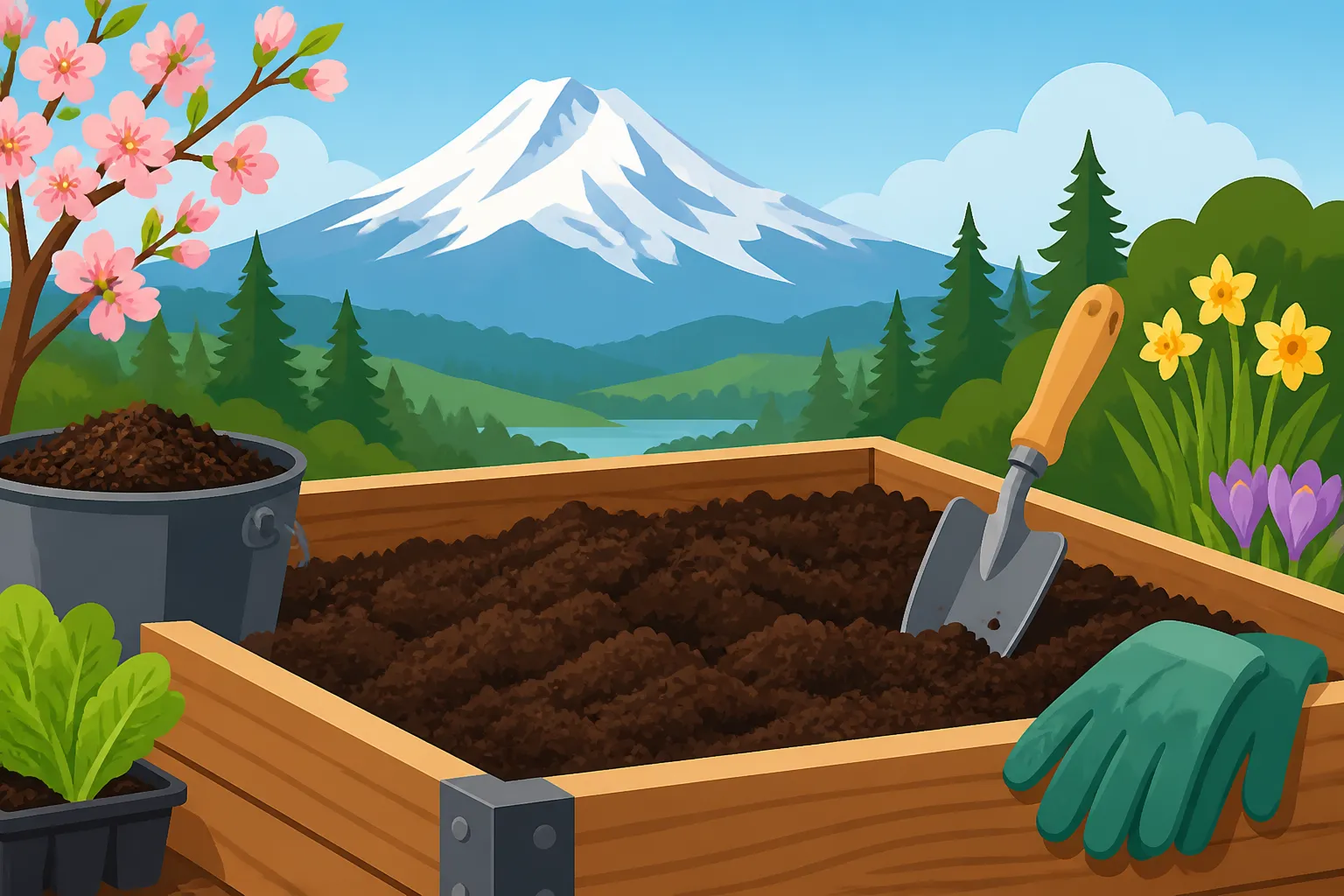
Early spring can make a raised bed look ready before its soil is workable: the surface may be wet, compacted, or cold, even when the calendar suggests planting. A little assessment before adding compost or sowing seeds helps protect soil structure and gives crops a better start. Here’s how to prepare raised beds for Oregon’s spring conditions without rushing the job.
Check the bed before working the soil
A raised bed can be easier to access than in-ground soil after rain, but it is not automatically dry or ready to plant. Check the soil itself before digging, mixing in amendments, or walking across the bed. Soil that is too wet can smear and compact under pressure, reducing the loose structure roots need.
Take a small handful from below the surface and gently squeeze it. If it feels saturated, sticks together in a dense mass, or smears when pressed, give it time to drain and dry. If it crumbles readily when you loosen your hand, it is more workable. Conditions can differ from one bed to another, especially where a bed sits in shade, catches roof runoff, or has drainage problems.
Avoid stepping on growing areas while the soil is wet. Even a narrow raised bed can be compacted by repeated foot traffic, and the damage may be difficult to undo without more digging. Use the paths around the bed, and plan access so you can reach the center without leaning heavily on the soil.
Check the bed’s surface and edges as well. Look for settled areas, exposed roots, standing water, soil washed onto paths, and gaps between the bed frame and the ground. A low spot may need soil brought back into place, but filling it before understanding why it settled can hide a drainage or erosion issue. If rainwater repeatedly pools, consider whether the bed has an outlet or whether the surrounding ground is directing water into it.
Oregon spring conditions vary by location, elevation, exposure, and weather. A bed in a sheltered urban yard may dry sooner than one in a cool, shaded spot, while a high-elevation garden may remain chilly even after a sunny spell. A regional calendar can help with seasonal planning, but the condition of your actual bed should guide soil work. For a broader look at regional timing, see Finding the Right Planting Calendar for Your Part of Oregon.
If you are unsure whether the ground is still too damp to work, Checking Garden Soil Moisture After Recent Pacific Northwest Rain offers a useful next step. For beds that stay wet despite a break in the rain, Using Raised Beds to Beat Wet Spring Soil in Western Oregon can help you think through drainage and site conditions.
Refresh soil without overworking it
Once the soil is workable, inspect what is already in the bed before adding anything. Look for areas that have settled, a surface crust, visible plant debris, and signs that last season’s soil has become compacted. Remove dead plants and large debris that could interfere with sowing or transplanting. Leave healthy soil structure intact rather than turning the entire bed over by default.
Oregon State University Extension Service says a raised bed can be prepared with a 2- to 3-inch layer of organic material. The right material depends on what your bed needs and what you have available. Finished compost is a common choice for adding organic matter, but an amendment should not be treated as a substitute for understanding the soil. If the bed already contains rich, workable soil, adding more material without a clear reason may not improve it.
Spread the organic material across the surface and work it in only as much as needed. If soil is damp, postpone incorporation until it is friable. Turning wet soil can break apart aggregates and leave compacted clods when it dries. In a bed with a healthy, loose structure, you may be able to leave the material as a surface layer and avoid unnecessary digging.
Avoid filling a bed with compost alone. Compost can settle as it decomposes, and a bed made entirely of it may not provide a stable, balanced growing medium for vegetables. If the bed needs a substantial refill, choose a suitable blend rather than relying on one material. Raised Garden Beds: Best Soil Mixes for Oregon Vegetables and Choosing Soil for Raised Beds: Topsoil, Sand, and Compost explain the trade-offs involved in different soil components.
The goal is not to make the soil look perfectly uniform. A useful bed has a structure that lets water move through while holding enough moisture for roots, with space for roots to grow. If the soil is already close to that condition, gentle surface preparation is usually more sensible than aggressive digging. If it is heavy, depleted, or poorly draining, the remedy may involve a broader change to the soil mix or bed setup.
For a spring sowing plan and other seasonal tasks, April Raised Bed Prep and Sowing Across Oregon can help connect bed preparation with what you intend to plant. Oregon State University Extension Service describes April as a time for fertilizing your lawn and preparing soil and raised garden beds. Treat the timing as a seasonal prompt, not a signal that every bed is ready for immediate planting.
Improve drainage and protect soil structure
Raised beds can drain differently from the ground around them, but their performance depends on construction, soil texture, and where water flows. A bed that drains too slowly may be filled with a dense mix, placed where runoff collects, or blocked at its base. A bed that dries quickly may need more organic matter, more attentive watering, or a different soil blend. Observe how the bed behaves after rain rather than assuming all raised beds have the same needs.
Check whether water moves through the bed or remains on the surface. If water lingers, avoid adding coarse material as a quick fix without considering the full soil profile. Mixing unlike textures can create a less predictable growing medium, and a small amount of sand is not a universal solution for heavy soil. Before making a major change, review the bed’s existing components and how they interact. How Raised Beds Prevent Waterlogged Roots in Oregon Rains covers the role of bed design, while How to Mix Loam, Compost, and Sand for Raised Garden Beds can help with blend decisions.
Keep the bed surface covered when you are not sowing or transplanting. A layer of organic material can reduce the impact of rain and limit soil exposure, but do not bury small seedlings or cover a row that needs light to germinate. If you use mulch between crops, pull it aside where you are sowing, then return it carefully once seedlings are established enough not to be smothered.
Protecting soil structure also means limiting unnecessary cultivation. Frequent turning can disturb soil organisms and bring buried weed seeds closer to the surface. For routine spring preparation, remove large debris, loosen only compacted spots, and use a rake to make a suitable seedbed. A fine, even surface can help small seeds make contact with moist soil, but avoid reducing the entire bed to powdery dust.
Raised beds are not immune to erosion. Strong rain can wash soil from an exposed surface, particularly in a newly filled bed or one without a protective cover. Check the frame and corners for leaks, and make sure soil is not spilling onto a path. If a frame is damaged, repair it before topping up the bed; otherwise, new material may wash away or settle unevenly.
Soil amendments should have a purpose. Compost may be useful where organic matter is low, but fertilizer is not a general fix for every weak-looking plant or tired bed. If crops struggled in the previous season, consider whether the issue may have been poor drainage, inconsistent moisture, shade, pests, disease, or unsuitable crop timing rather than assuming the soil needs feeding. For advice on matching amendments to conditions, see Improving Oregon Garden Soil: Compost, Texture, and Amendments.
Get the bed ready for the crops you plan to grow
A prepared bed is not necessarily ready for every crop. Early spring is suitable for some cool-season planting, while warmth-loving crops generally need warmer soil and more settled weather. Think about the crop, its method of planting, and the bed’s actual conditions before sowing. A calendar is a planning aid; it cannot make cold soil warm or remove the risk of a late chill.
Start by deciding whether you will sow seeds directly or transplant seedlings. Direct-sown crops need a suitable seedbed and conditions that support germination. Transplants need soil that is workable and a period of weather that lets them establish without undue stress. If spring rain delays outdoor work, starting seeds indoors may be an option, but it is not always the best route for every crop. Starting Seeds Indoors vs Direct Sowing in Oregon Gardens compares the practical differences.
Check soil temperature when it matters for the crop you are planting. Air temperature can rise during a sunny day while soil remains cool, particularly in a shaded bed or a location with a short, chilly spring. Soil warmth is one clue among several, alongside weather patterns, drainage, and the crop’s needs. For more on using temperature as a planting cue, see When to Plant in Oregon: Using Soil Temperature and Season Clues.
Before sowing, remove weeds while they are small and loosen the surface where the seed row will go. Follow the seed packet for planting depth, spacing, and other crop-specific directions. If the surface is dry but the soil below remains damp, avoid soaking the entire bed unnecessarily. If the bed is dry through the root zone, water it before planting and let excess water drain away.
For transplants, prepare a planting spot that accommodates the root ball without forcing it into compacted soil. Watering the plant and surrounding soil after setting it in place can help settle soil around roots, but avoid leaving the bed saturated. If frost remains a concern, use crop-appropriate protection and monitor conditions rather than relying only on an average date. Spring Frost Dates and Freeze Risk Across Oregon explains why frost risk differs around the state.
A simple readiness check can keep spring work focused:
| What to check | What you want to see | What to do if it is not ready |
|---|---|---|
| Soil moisture | Soil is workable and does not smear into a dense mass | Wait for drainage and drying before digging |
| Soil surface | No hard crust or large debris where you will sow | Clear debris and loosen only the planting area |
| Drainage | Water does not repeatedly collect in the bed | Investigate the soil mix, bed location, and runoff |
| Soil level | The bed is not visibly low or spilling at the edges | Address the cause of settling or loss before topping up |
| Crop plan | The crop suits the current soil and seasonal conditions | Delay planting or choose a crop better suited to the conditions |
Follow a practical spring preparation routine
A reliable routine begins with observation, not a shopping list. Check the bed after rain, identify what is actually wrong, and make the smallest useful change. This helps avoid adding unnecessary amendments or working soil while it is too wet.
- Clear away dead plants and large debris. If material shows signs of disease or pests, do not assume it belongs in the bed; handle it according to appropriate local guidance.
- Check the frame, corners, and surrounding area for gaps, erosion, or runoff. Repair structural problems before adding soil.
- Test moisture by hand in more than one spot. A bed can be unevenly wet, particularly near a downspout, fence, or shaded edge.
- Wait if soil is sticky or smears when squeezed. Avoid digging or walking on it while it is saturated.
- Once workable, remove weeds and loosen compacted patches without turning the entire bed unnecessarily.
- Add organic material only where it serves a purpose, then spread it evenly and avoid burying the planting surface under an excessive layer.
- Decide what you will plant and check the crop’s instructions before preparing rows or planting holes.
- Sow or transplant only when both the bed and the crop are suited to the conditions.
After planting, watch how the bed responds to rain and changing weather. A newly prepared surface can dry faster than the soil below, while an overwatered bed may remain cold and saturated. Check beneath the surface before watering, and adjust to the crop’s stage of growth and the bed’s drainage. If a cover or mulch is in place, look underneath rather than judging moisture from the top alone.
Be cautious about trying to speed the season with a rushed soil makeover. Adding a deep layer of amendment, digging wet ground, or planting heat-loving crops into cold soil can create more work than waiting for conditions to improve. In some situations, a smaller prepared area is more useful than amending the whole bed. You can sow a suitable crop in a workable section while leaving other areas undisturbed until they are ready.
For beds that warm slowly, raised-bed design and surface exposure can affect how quickly soil becomes suitable for planting. The effect is not identical across Oregon, and a sunny, sheltered bed will behave differently from one exposed to wind or shaded by buildings. How Raised Beds Warm Soil Earlier for Oregon Spring Vegetables discusses that seasonal advantage and its limits.
If you are preparing more than one bed, keep notes on where water collects, which areas dry first, and how crops perform. Those observations can help you decide whether a future change should focus on soil texture, drainage, shade, or crop choice. They are often more useful than repeating the same amendment routine every spring.
Frequently Asked Questions
Should I dig over a raised bed before spring planting?
Not automatically. If the soil is workable and already has a loose structure, remove debris and loosen only the planting areas that need it. Avoid digging when the soil is saturated, because wet soil is more vulnerable to compaction.
Is compost enough to refill a raised bed?
Not always. Compost can be a helpful component, but using it alone may lead to settling and an unsuitable growing medium. Consider the existing soil and choose a balanced mix if the bed needs substantial refilling.
Can I plant as soon as I add organic material?
Not necessarily. The bed’s moisture, drainage, and the crop’s temperature needs still matter. Prepare the bed when the soil is workable, then follow crop-specific planting guidance.
What if my raised bed stays wet?
Look at the soil mix, the bed’s base, and the way runoff moves across the site. Avoid adding amendments without identifying the cause. If the problem persists, review bed drainage and soil composition before planting sensitive crops.
Sources
- Oregon State University Extension Service — Monthly Garden Calendars | OSU Extension Service (checked November 15, 2026)
Disclaimer
This article is for general informational purposes only and does not constitute professional advice. Laws, prices and regulations vary by location and change over time. Consult a qualified professional for guidance on your specific situation. Oregon Gardening Guide is not a government agency and is not affiliated with any university extension, state department of agriculture or other government agency.